


Dateline: September 7, 2026
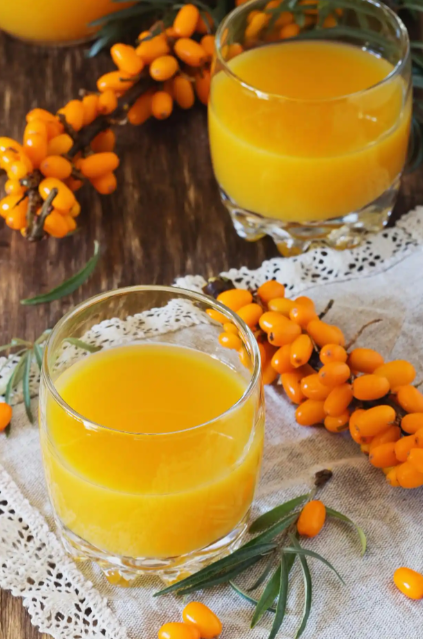
A batch of 21 cartons of organic sea buckthorn puree and sea buckthorn juice beverages recently passed official customs supervision and were successfully exported to Singapore. This marks the first entry of “plateau berry” products from the old revolutionary base area into the high-end food market of Southeast Asia. As a niche health drink deeply rooted in China’s Loess Plateau, sea buckthorn juice has long faced multiple challenges such as unfamiliar market access rules and unclear customs clearance procedures when expanding overseas. This export case reveals the systematic “customs clearance code” behind domestic sea buckthorn products breaking through technical trade barriers and opening up the Southeast Asian market.
Localized Compliance: Align with Southeast Asian Food Access Standards
Singapore has one of the strictest food access systems in Southeast Asia, with clear requirements for product ingredients, label information and traceability system. For small and medium-sized sea buckthorn enterprises that have long been deeply engaged in the domestic market, it is almost impossible to complete independent docking in a short time. The local customs authority sorted out the full text of Singapore’s food safety regulations for export enterprises, guided enterprises to standardize foreign language labels covering nutritional component table, production batch number, shelf life and importer information, and helped enterprises build a full-chain traceability account from raw material procurement, production and processing to finished product delivery. This move not only makes the product fully meet the access conditions of the destination country, but also lays a foundation for subsequent expansion to Malaysia, Thailand and other markets.
Process Empowerment: Realize Efficient Customs Clearance from Filing to Certificate Issuance
Different from general goods, the whole process of food export involves multiple links such as enterprise record-filing, destination country supervision, on-site inspection and sanitary certificate issuance. In this sea buckthorn juice export operation, the customs department implemented convenient measures such as local inspection and priority certificate issuance. Enterprises completed the submission of all materials through China International Trade Single Window, and the customs completed the whole process review and supervision in the shortest time, avoiding the additional cost and time loss caused by the lag of traditional links. This efficient customs clearance model has become a key support for local characteristic agricultural products to quickly seize the window of overseas orders.
RCEP Dividend: Reduce the Threshold for Characteristic Agricultural Products to Go to Sea
In recent years, the customs department has been focusing on characteristic agricultural and food products, actively docking with RCEP and co-building the “Belt and Road” national market, and promoting many county agricultural products to achieve “zero breakthrough” in export. For sea buckthorn products, RCEP rules can not only help enterprises enjoy corresponding tariff preferences, but also further reduce the technical trade barriers between China and Southeast Asian countries through mutual recognition of standards and mutual recognition of certificates. For a long time, many small and medium-sized sea buckthorn enterprises have no way to understand these policy dividends. Through targeted policy publicity and one-to-one guidance, the customs has turned the rules on paper into actual order advantages.
Industry Closed Loop: From Ecological Resources to Foreign Trade Advantages
The local area relies on the excellent ecology of the Loess Plateau to develop characteristic agriculture such as sea buckthorn, walnuts and coarse cereals, and continuously transforms ecological resources into industrial advantages. The successful export of sea buckthorn juice to Singapore is not only a single breakthrough in product export, but also a typical practice of revitalizing rural industries with foreign trade. In the future, more local sea buckthorn enterprises will take this as a starting point to further expand the scale of exports and drive more characteristic agricultural products from old revolutionary base areas to the international market.
FQA
Q: What core difficulties did sea buckthorn enterprises encounter when exporting to Singapore for the first time?
A: The main difficulties include unfamiliarity with Singapore’s food access standards, non-standard English labels, and unclear customs clearance process, which once restricted enterprises from submitting declarations smoothly.
Q: What key supports did the customs provide for this export?
A: The customs sorted out the regulatory requirements of the destination country for enterprises, guided the improvement of traceability accounts, optimized raw material control, and implemented convenient measures such as local inspection and priority certificate issuance.
Q: Can sea buckthorn juice enjoy tariff preferences when exported to Southeast Asia?
A: Yes, under the RCEP framework, qualified enterprises can apply for CO certificate to enjoy corresponding tariff reduction or exemption treatment, reducing the comprehensive cost of export.
Q: What conditions do export food production enterprises need to meet for overseas registration?
A: It is necessary to complete the record-filing of export food production enterprises, establish an effective food safety control system, meet the regulatory requirements of the destination country, and the enterprise credit status cannot be a dishonest enterprise of customs.
Q: What is the significance of this sea buckthorn juice export to the local industry?
A: It marks that the local characteristic agricultural products from the old revolutionary base area have successfully entered the high-end market of Southeast Asia, helping the local sea buckthorn industry to transform from ecological resources to foreign trade advantages.
Q: Will the customs continue to support more sea buckthorn products to go to sea in the future?
A: Yes, the customs will continue to optimize services, focus on technical trade assistance and customs clearance guarantee, and promote more “domestic characteristic” products represented by sea buckthorn to go global.
Post time: Sep-07-2026


