


With an L-theanine content three times higher than ordinary green tea, Chinese matcha is redefining global taste standards. Driven by advanced shading techniques and rigorous quality control, this vibrant green powder has become a memorable sensation for overseas consumers, blending superior umami flavor with robust health benefits.
The Science of Umami: Why L-Theanine Matters
The secret behind the unforgettable taste of Chinese matcha lies in its biochemical composition, specifically its high concentration of L-theanine. Unlike standard green tea leaves that grow under full sunlight, matcha-grade tea plants undergo a crucial “shading” process. Approximately 20 days before harvest, tea gardens are covered with black nets to block direct sunlight. This technique inhibits the conversion of L-theanine into catechins, which are responsible for bitterness. Consequently, the leaves accumulate significantly more amino acids.
According to national standards and agricultural data, the L-theanine content in premium Chinese matcha ranges from 3.8 to 7.7 mg/g, nearly triple that of regular green tea. This abundance creates a distinct savory flavor known as “umami,” accompanied by a natural sweetness and a hint of seaweed aroma. For international consumers accustomed to bitter or astringent teas, this smooth, rich profile offers a novel and pleasant sensory experience that lingers on the palate.
Superior Quality Through Standardized Cultivation
China’s rise in the global matcha market is not merely about volume but also about adhering to strict quality benchmarks. The implementation of the national standard GB/T 34778-2017 has standardized the production process, ensuring consistency and safety. Regions such as Tongren in Guizhou Province and Hangzhou in Zhejiang have emerged as core production hubs, leveraging their unique climatic advantages. For instance, Tongren’s low annual sunshine hours provide ideal natural conditions for shading, enhancing chlorophyll and amino acid synthesis.
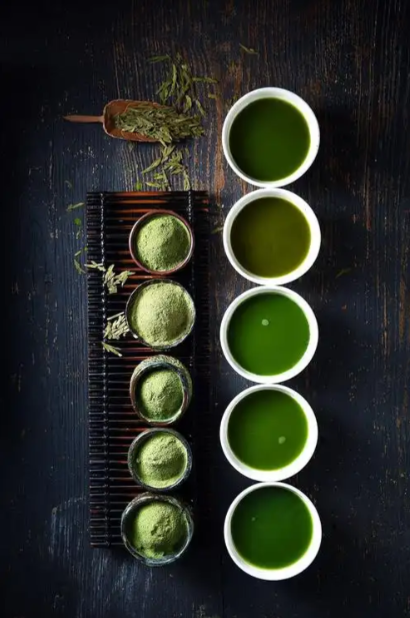
Modern processing facilities employ steam fixation and ultra-fine grinding technologies to produce micro-powder with particle sizes below 18 micrometers. This results in a texture that is细腻 (fine) and uniform, allowing the matcha to dissolve completely in water or milk without grittiness. The vibrant emerald color, maintained even when mixed with other ingredients, serves as a visual testament to its freshness and high chlorophyll content, further attracting health-conscious consumers abroad.
From Ingredient to Global Brand
Beyond raw material export, Chinese matcha is increasingly recognized for its value-added applications. The global demand for matcha-infused products, from lattes and ice creams to baked goods, has surged. Chinese producers are moving up the value chain, supplying high-quality ingredients to major international beverage chains and artisanal cafes. The combination of competitive pricing, scalable production capacity, and improving brand reputation has allowed Chinese matcha to fill supply gaps left by traditional producers facing climate and labor challenges. This strategic shift ensures that Chinese matcha is not just a commodity but a preferred choice for quality-driven global brands.
Frequently Asked Questions (FAQ)
Q1: Why does Chinese matcha have a higher L-theanine content than regular green tea?
A: The key difference is the shading cultivation method. Tea plants are covered for about 20 days before harvest, which reduces sunlight exposure. This stress response causes the plant to retain more L-theanine instead of converting it into bitter catechins, resulting in a sweeter, umami-rich flavor.
Q2: Is Chinese matcha safe for international consumption?
A: Yes. Chinese matcha production adheres to strict national standards (GB/T 34778-2017) and international safety requirements. Leading production bases implement rigorous pesticide residue controls and heavy metal testing to ensure product safety for export markets.
Q3: How does the taste of Chinese matcha compare to Japanese matcha?
A: While both share similar production methods, Chinese matcha is often noted for its strong umami and fresh aroma due to specific regional terroirs like Guizhou and Zhejiang. Many blind taste tests suggest that high-grade Chinese matcha offers a comparable, if not superior, balance of sweetness and bitterness at a more accessible price point.
Q4: What are the main health benefits of drinking matcha?
A: Matcha is rich in antioxidants, particularly EGCG, and L-theanine. These compounds help reduce oxidative stress, improve focus without the jitters associated with coffee, and support metabolic health. Its high chlorophyll content also aids in detoxification.
Q5: Can I use Chinese matcha for baking and cooking?
A: Absolutely. Due to its fine particle size and stable color, Chinese matcha retains its vibrant green hue and flavor even when heated. It is widely used in cakes, cookies, ice cream, and beverages, making it a versatile ingredient for culinary applications.
Q6: Where is the primary production area for matcha in China?
A: The main production hubs are located in Guizhou Province (particularly Tongren, known as the “Capital of Chinese Matcha”) and Zhejiang Province (such as Hangzhou and Wuyi). These regions benefit from favorable climates and advanced processing infrastructure.
Post time: Sep-28-2026


