


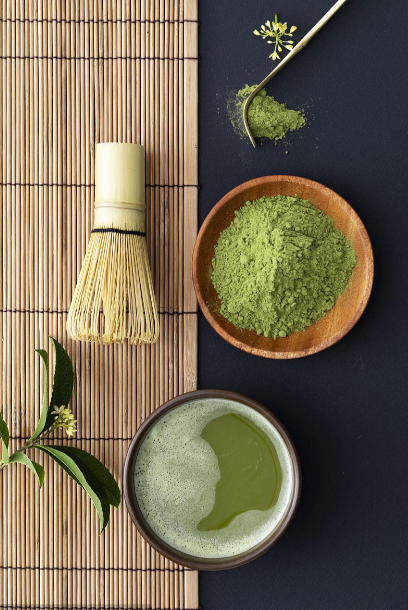
Once a centerpiece of Song Dynasty literati gatherings, the whisked powdered tea tradition that gave birth to matcha traveled overseas centuries ago and became closely linked with international tea culture perceptions. Today, with China accounting for nearly 70 percent of global matcha output, the country’s tea producers are not only scaling up production but also tracing the art back to its roots, reconnecting modern consumers worldwide with the original Eastern tea aesthetics that defined matcha more than 1,000 years ago.
From Song Dynasty Tea Battles to Global Shelves
Long before matcha became a global wellness trend, it was an everyday ritual in 11th-century China. During the Song Dynasty, tea lovers ground compressed tea cakes into fine powder, mixed it into a smooth paste, added hot water and whisked vigorously with a bamboo tool to create a frothy, jade-green beverage. Literati held “tea battles” to compete over who could produce the most delicate foam and layered flavor, turning tea preparation into a refined performance of skill and taste.
This ancient whisked tea method later spread to Japan and evolved into the matcha tradition widely recognized today. For decades, global consumers associated premium matcha exclusively with Japanese production regions. But as China’s modern matcha industry matured, tea producers began rediscovering and reintroducing their own forgotten heritage, showing international buyers that matcha’s cultural origin lies deep in Chinese tea history.
Ecological Advantages Meet Modern Industrial Standards
Today’s Chinese matcha revival is rooted in both exceptional natural conditions and strict quality control systems. The misty highlands of Guizhou’s Tongren, located along the 27th parallel north golden tea-growing belt, offer high altitude, mild temperatures, diffuse sunlight and fertile soil, creating ideal conditions for growing tea leaves rich in chlorophyll and amino acids.
Local leading enterprises have built the world’s largest single matcha refining workshop, adopting EU-level pest control protocols, biological pest prevention and manual weeding to minimize chemical intervention. Before packaging, every batch undergoes more than 200 safety tests, ensuring the final product meets the highest international food safety benchmarks. This combination of ancient ecological wisdom and modern industrial precision has allowed Chinese matcha to steadily enter premium markets across Europe, North America and the Middle East.
Blending Ancient Ritual with Modern Lifestyle
Unlike traditional loose-leaf tea, matcha allows consumers to fully consume the entire leaf, making it a natural fit for today’s global wellness movement. Chinese producers are reimagining the Song Dynasty “whisking ritual” for contemporary users, creating simple, accessible experiences that balance tradition with convenience.
In cultural experience spaces across China’s tea regions, visitors can learn to whisk matcha just as Song Dynasty scholars did, feeling the same rhythmic motion that once filled ancient tea houses. These immersive sessions are now being adapted for international tea workshops, overseas cultural exhibitions and online video platforms, helping global audiences understand matcha not merely as a trendy health ingredient, but as a living cultural practice with a continuous millenary lineage.
Reclaiming Cultural Discourse in the Global Market
China’s position as the world’s largest matcha producer is no longer defined only by output volume. It is increasingly building influence through cultural storytelling, standard-setting and product innovation. Chinese tea industry organizations are participating in international discussions to formulate unified global matcha production standards, ensuring the origin, processing techniques and cultural heritage of matcha are fairly represented in global trade rules.
As more international buyers visit Chinese matcha plantations, experience traditional tea ceremonies and trace the full journey from ancient tea classics to modern production lines, a new global narrative is taking shape: matcha is a shared cultural heritage that shines brightest when its original roots are understood, respected and carried forward.
FQA
- Q: What makes Chinese matcha different from other global matcha products?A: Chinese matcha benefits from high-elevation misty tea gardens, strict EU-standard quality control and a direct lineage to the Song Dynasty whisked tea tradition, delivering a naturally sweet, low-bitterness flavor profile that suits both traditional preparation and modern creative beverages.
- Q: How much of the world’s total matcha supply does China currently produce?A: By 2025, China’s annual matcha output is expected to surpass 12,000 metric tons, accounting for roughly 70 percent of global production, making it the largest matcha producer in the world.
- Q: Can Chinese matcha meet strict international food safety requirements for exports?A: Yes. Leading Chinese matcha enterprises implement more than 200 safety test items before shipment, covering pesticide residues, heavy metals and microbial indicators, to ensure full compliance with EU, U.S. and other major destination market standards.
- Q: How are Chinese producers promoting the Song Dynasty matcha tradition to global consumers?A: They are hosting immersive whisking workshops, publishing cultural heritage content on international social media, cooperating with global wellness influencers and setting up tea experience zones at overseas cultural events to share the full story of matcha’s origins.
- Q: What new product categories are Chinese matcha producers developing beyond pure matcha powder?A: They are expanding into matcha latte bases, plant-based protein mixes, natural skincare ingredients, craft beverages and cultural souvenir lines that extend matcha usage into daily life scenarios.
- Q: What is the long-term goal for China’s matcha industry on the global stage?A: The industry aims to move from being a leading global supplier to a respected cultural brand voice, participating in international standard-setting and helping the world recognize matcha as a precious part of shared Eastern tea civilization.
Post time: Sep-18-2026


