


Lead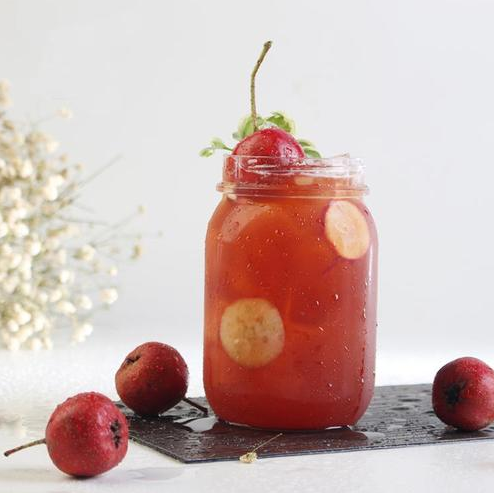
Every autumn, hillsides across northern China turn red with ripe hawthorns, but for decades, this bright wild fruit could only be enjoyed fresh for less than two months a year. Today, concentrated hawthorn juice is everywhere on menus, supermarket shelves and bakery ingredient lists — even in the middle of summer. How did a highly seasonal mountain fruit transform into a year-round industrial staple?
China’s hawthorn processing industry has entered a rapid growth phase, with the total market value of hawthorn deep-processing products exceeding 7.2 billion yuan in 2026. Concentrated hawthorn juice accounts for nearly 40% of that output, and it has become the fastest-growing segment in the fruit concentrate market. Before 2020, more than 60% of hawthorn fruits were sold fresh or made into simple dried slices, and most processing factories could only operate for 2 to 3 months a year during harvest season. The old production lines wasted over 35% of raw materials, and the final products often lost most of their natural aroma and vitamin C after long high-temperature boiling.
The full process upgrade that changed the industry starts right at the raw material sorting stage. Following the newly released national standard Hawthorn Grade Specifications, factories now divide fresh hawthorns into super, first and second grades by size and ripeness, making sure no rotten or unripe fruit enters the production line. After gentle washing, the fruits are sent to roller crushers that press them flat without breaking the seeds, preventing bitter kernel substances from leaking into the juice. Next comes the low-temperature softening and countercurrent extraction step: fruits are heated to 95-100°C for 10 to 15 minutes, then soaked at 60°C in a continuous countercurrent system that pulls out 92% of the fruit’s soluble solids, far higher than the old one-time soaking method. After pectinase clarification at 35°C for 3 hours, the clear raw juice goes through instant sterilization at 95°C for 20 seconds, before entering a vacuum concentrator that evaporates water at 40°C under reduced pressure. This whole process locks in more than 85% of the original vitamin C and natural hawthorn aroma, something traditional boiling concentration could never achieve.
This stable, high-quality concentrated product has completely reshaped downstream industry scenarios. At a popular chain fruit tea store in Handan, Hebei, store manager Li says they used to struggle with inconsistent hawthorn flavor every month when they made juice from fresh fruit. Now with standardized concentrated hawthorn juice, every iced hawthorn sparkling drink tastes exactly the same, no matter if it is January or July. Local yogurt factories mix it into probiotic drinks to add a bright sour note, and pastry shops use it as filling for hawthorn-flavored mooncakes that sell well even in non-harvest seasons. Even family consumers now buy small bottled concentrated hawthorn juice to make homemade sour plum soup, no need to wait for autumn hawthorn harvest.
Industry nutrition researchers point out that modern concentrated hawthorn juice retains far more natural active ingredients than old-process products. Its rich organic acids can help stimulate gastric secretion and aid digestion after greasy meals, while the natural flavonoids support healthy blood lipid levels. They also remind consumers that the product is not a medicine: people with excessive stomach acid should not drink it on an empty stomach, and pregnant women need to consult a doctor before regular consumption. It is best to dilute it properly and enjoy it after meals.
Looking ahead, the concentrated hawthorn juice industry will keep expanding with new membrane concentration and mild fermentation technologies. The once seasonal mountain fruit will no longer be limited by harvest time, and it will become a more widely used natural, clean-label ingredient across the global food industry. This transformation is not just a technical breakthrough for one fruit, but also a perfect example of how modern food processing can connect mountain agriculture with the huge year-round consumer market.
FAQ
- How long can concentrated hawthorn juice stay fresh after production?Sealed unopened products stored in cold warehouses can stay fresh for up to 12 months, far longer than fresh hawthorn which only lasts 7 to 10 days after picking.
- Does modern processing reduce the natural health benefits of hawthorn?No. The low-temperature vacuum concentration technology used today retains over 85% of the original vitamin C and natural flavonoids, performing much better than traditional high-temperature boiling methods.
- What is the standard dilution ratio for commercial beverage use?Most bubble tea shops and drink stores follow a 1:7 ratio, mixing 1 part concentrated hawthorn juice with 7 parts water, tea or sparkling water to get the classic balanced sweet-sour taste.
- Can concentrated hawthorn juice be used in baking?Yes. Both clear and cloudy concentrated hawthorn juice can be added to pastries, ice cream and fillings, bringing natural hawthorn flavor without adding extra artificial preservatives.
- Why did old factories fail to make stable concentrated hawthorn juice all year?Old processes used high-temperature open boiling that destroyed most aroma and nutrients, and they had no standardized raw material grading system, so flavor changed drastically with different batches of seasonal fresh fruit.
- Is concentrated hawthorn juice suitable for children?Diluted to a milder ratio, it is safe for children to drink occasionally, but parents should make sure kids rinse their mouths after drinking, as the natural acid may erode tooth enamel if left uncleaned.
Post time: Jul-09-2026


