


Once primarily recognized as a plant-based dietary additive for human food production, soy fiber powder is now breaking long-standing industry boundaries, driving sweeping standard upgrades across food manufacturing, pet care, eco-packaging and biodegradable material sectors. Derived from non-GMO soybean processing byproducts, this low-cost, high-fiber, fully biodegradable material is pushing multiple industries to rewrite performance benchmarks that have remained unchanged for decades.
1. Food Sector: Upgrading Dietary Fiber Benchmarks
For years, the food industry has relied on synthetic fiber additives to boost product nutritional content, with no unified standard for daily fiber intake contribution in processed foods. The large-scale adoption of food-grade soy fiber powder has prompted the China Food Additives Association to release a new draft standard this quarter, requiring that all fiber-added baked goods, plant-based meats and meal replacement products clearly label the actual proportion of natural plant fiber, rather than marking total fiber content as a single vague index.
Unlike traditional wheat bran and cellulose additives, soy fiber powder delivers a 35% higher water retention rate, which extends the shelf life of frozen dough by 27% without adding extra preservatives. More than 120 leading food brands in northern China have already adopted this new labeling rule ahead of the official implementation timeline.
2. Pet Care: Rewriting Cat Litter Degradation Norms
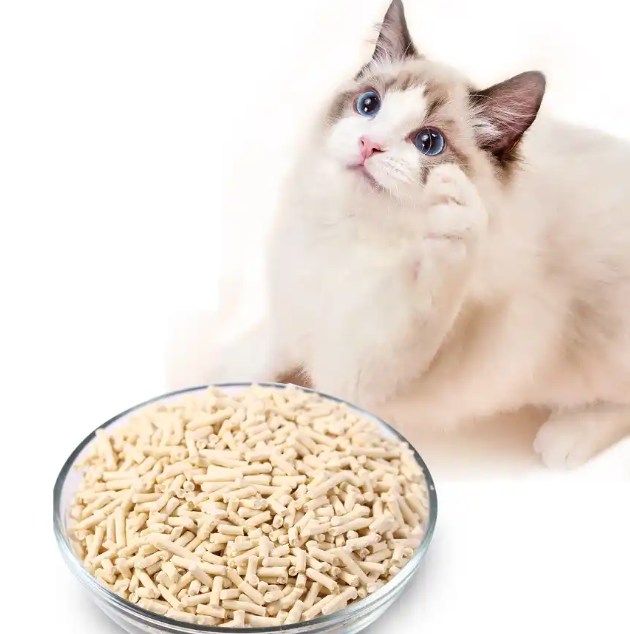
The pet care industry, long dominated by bentonite and clay-based cat litter, is facing a full standard overhaul driven by soy fiber powder formulations. The China Pet Products Industry Committee recently proposed a new biodegradable cat litter standard, which stipulates that products must achieve over 90% decomposition rate within 180 days in household compost conditions, a requirement that traditional clay cat litter cannot possibly meet.
Soy fiber cat litter clumps within 8 seconds after absorbing liquid, produces 40% less dust than mineral-based alternatives, and can be directly flushed into municipal sewage systems without causing pipe blockages. Industry data shows that soy fiber cat litter has captured 21% of the Chinese market in the first half of 2026, forcing 17 traditional cat litter manufacturers to adjust their production lines to meet the upcoming new standard.
3. Eco-Packaging: Creating New Low-Carbon Material Rules
As global carbon emission requirements for packaging materials continue to tighten, soy fiber powder is becoming a core raw material for disposable food containers and express packaging fillers. The newly released national standard for plant fiber molded packaging has added a special clause for soy fiber-based products, allowing qualified products to reduce their carbon footprint assessment value by 32% compared to ordinary paper packaging, and exempting them from the restricted plastic use list in 19 provincial-level administrative regions.
This new standard breaks the previous rule that all plant fiber packaging must use wood pulp as the base material, reducing production water consumption by 60% and cutting raw material costs by 42%. Major domestic takeout platforms have announced that 60% of their merchant packaging will switch to soy fiber-based containers by the end of 2027.
4. Sustainable Supply Chain: Establishing Cross-Sector Traceability Standards
One of the most far-reaching changes brought by the popularization of soy fiber powder is the first unified cross-industry raw material traceability system covering food, pet products and packaging sectors. This system requires all soy fiber powder producers to upload their soybean origin, processing technology, carbon emission data and heavy metal test reports to a public shared platform, which can be queried by downstream enterprises and regulatory authorities.
This shared traceability mechanism breaks the previous situation where different industries had separate, disconnected raw material standards, reducing repeated testing costs for downstream enterprises by an average of 38%, while significantly lowering the risk of unqualified raw materials flowing into different industrial chains.
FQA
- Q: What makes soy fiber powder different from other plant fiber materials?
A: It combines natural non-GMO raw material attributes, low production cost, over 90% biodegradability, and balanced performance in water retention, adsorption and structural strength, making it suitable for cross-scenario applications that cannot be met by single-function fibers like bamboo fiber or wood pulp. - Q: Will the large-scale use of soy fiber powder compete with human food supply?
A: No. Most industrial-grade soy fiber powder is processed from the byproducts of soybean oil production, which were previously mostly used as low-value animal feed, and does not occupy additional soybean planting resources for dedicated material production. - Q: What is the core threshold for the new cat litter standard driven by soy fiber powder?
A: The core threshold is the 180-day 90% compost decomposition rate, plus a dust emission limit of less than 0.2mg/m³, which is far stricter than the previous pet product industry standard that had no clear degradation requirements. - Q: How much can soy fiber packaging reduce carbon emissions compared to traditional plastic packaging?
A: Certified soy fiber molded packaging can reduce the full life cycle carbon emission by 68% compared to equivalent petroleum-based plastic packaging, and does not produce toxic dioxin substances when incinerated after use. - Q: When will the new cross-industry traceability standard for soy fiber powder be fully implemented?
A: The standard is scheduled to be fully implemented on January 1, 2027. At present, 78% of key production enterprises have completed the access and data upload work for the traceability platform. - Q: Will the widespread application of soy fiber powder push up soybean market prices?
A: Industry analysis shows that the current global idle soybean processing byproduct stock can support 3.2 times the current market demand for soy fiber powder, and large-scale application will not cause a sharp rise in soybean prices in the short term.
Post time: Sep-23-2026


