


Apple and pear juice concentrates are essential bulk fruit ingredients for global beverage, bakery, and dairy producers. Most international shipments rely on 20ft refrigerated (reefer) containers for 20–45-day transoceanic voyages. A common issue for importers is that clear, pale golden concentrates often turn amber or dark brown upon arrival—even when shipped under constant low temperatures. Color stability, measured by CIELAB L*, a*, b* values, is a critical quality standard for manufacturers. This article explains the chemical causes of browning, reefer-specific risk factors, and proven solutions to preserve color during overseas transport.
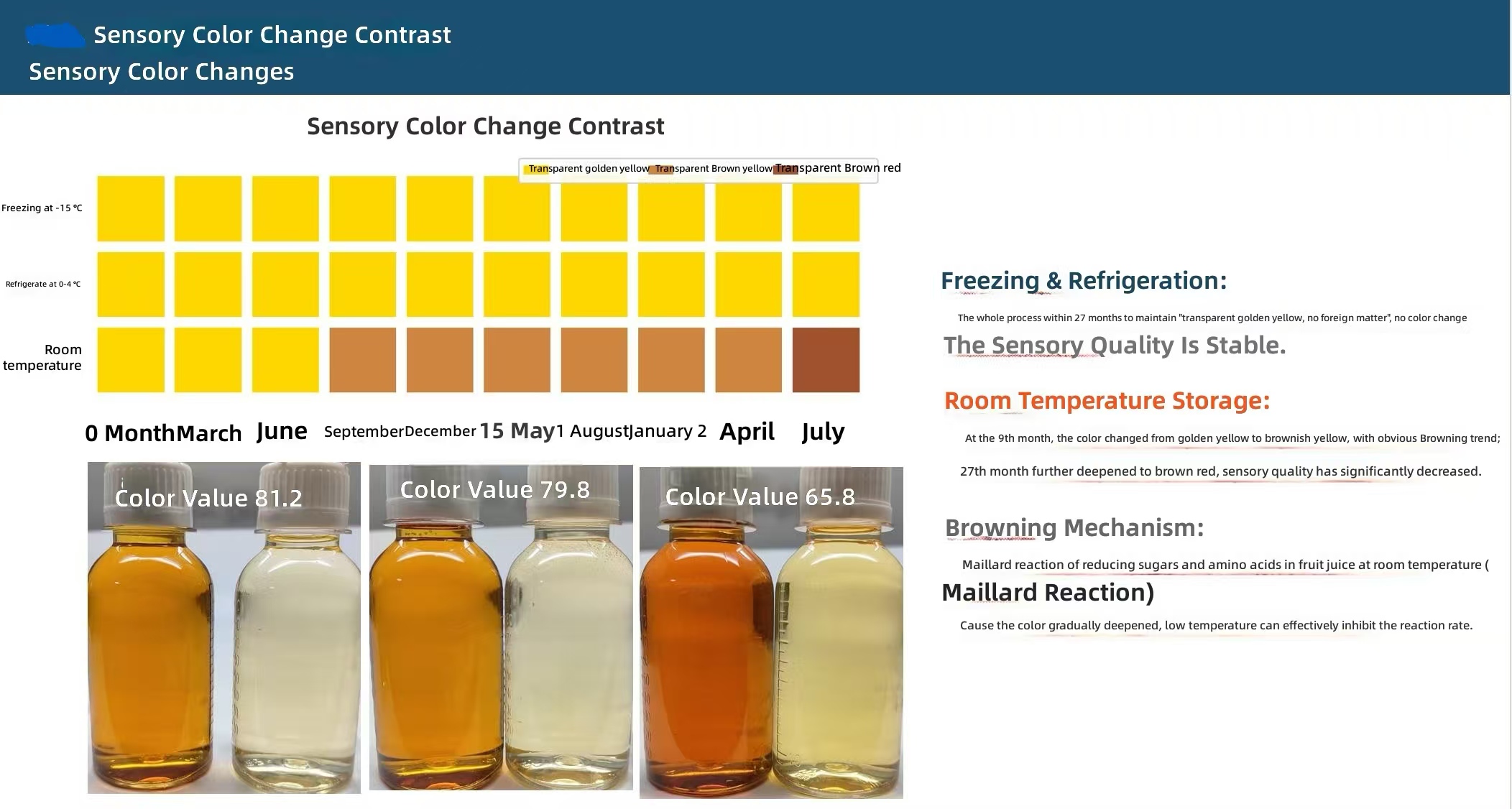
The primary cause of discoloration during reefer shipping is non-enzymatic browning, as polyphenol oxidase (PPO) is already deactivated by aseptic high-temperature sterilization. Three key chemical reactions drive darkening:
- Maillard Reaction: The main culprit. Apple and pear concentrates contain high levels of reducing sugars (glucose, fructose) and free amino acids. Even at 0–4°C, these compounds slowly polymerize over weeks to form dark melanoidins, reducing brightness (L* value) and raising the A420 browning index. Pear concentrate browns 30–50% faster due to higher amino nitrogen content.
- Polyphenol Oxidation: Trace residual oxygen in aseptic drum headspaces causes slow oxidation of natural polyphenols (chlorogenic acid, catechin), forming brown quinone polymers. Metal ions (iron, copper) from packaging or equipment sharply accelerate this reaction.
- Ascorbic Acid Degradation: Natural vitamin C breaks down gradually in cold storage, reducing antioxidant protection and triggering secondary browning.
Reefer container shipping creates unique conditions that speed up color loss far beyond stationary cold storage:
- Temperature Fluctuations: Port handling, power shifts, and sea temperature changes cause ±2–3°C swings. Browning rates increase by 32% under unstable cooling, and temperatures above 7.2°C (45°F) trigger rapid darkening in just 20 days.
- Long Transit Times: 25–40-day voyages amplify time-dependent non-enzymatic browning. Pear concentrate’s browning index rises by over 0.3 units after 30 days at 4°C.
- Light Exposure: Customs inspections expose concentrates to UV and visible light, degrading pigments and lowering L* values.
- Vibration-Related Leaks: Ocean turbulence causes micro-leaks in aseptic bag seals, allowing oxygen intrusion and localized darkening.
Color stability varies sharply between apple and pear concentrates:
| Index | Clear Apple Concentrate | Pear Juice Concentrate |
|---|---|---|
| Base Color | Pale straw yellow | Light off-white golden |
| Browning Speed | Moderate | 30–50% faster |
| 30-Day Reefer Result | Slight amber tint | Obvious yellow-brown shift |
As a professional Chinese exporter, we implement a full-process control system to stabilize color for 20ft reefer shipments:
- Raw Material Selection: We choose low-polyphenol, low-amino-acid fruit varieties and reject under/over-ripe produce to limit browning precursors.
- Low-Temperature Vacuum Concentration: Using evaporation below 60°C (instead of traditional high-heat methods) minimizes initial Maillard reactions and preserves natural light color.
- Nitrogen-Filled Aseptic Packaging: Drums are fully filled to eliminate headspace, and residual oxygen is displaced with food-grade nitrogen (O₂ ≤0.5%). Food-grade stainless steel drums prevent metal ion contamination.
- Strict Reefer Logistics Standards: We mandate a constant 0–2°C shipping temperature (no higher than 5°C), minimize container door openings during customs checks, and avoid port-side sunlight exposure.
- Natural Antioxidant Formulation: Trace amounts of natural citric acid and fruit-sourced vitamin C are added to adjust pH and block oxidation, complying with FDA and EU regulations—no synthetic preservatives for organic orders.
FAQs for Global Buyers
- Is darkened concentrate unsafe? Mild browning is only a visual change with no safety risks; flavor remains stable with a subtle raisin note. Severe dark browning stems from damaged packaging or high temperatures, which our controls prevent.
- Can frozen (-18°C) reefers stop browning? While freezing halts browning, it damages the colloidal structure of clear concentrates, causing permanent cloudiness and sediment. We only recommend frozen shipping for cloudy apple concentrate.
- How long is color preserved? With our nitrogen packaging, clear apple concentrate stays stable for 35 days, and pear concentrate for 28 days in 0–2°C reefers.
In conclusion, browning of apple and pear juice concentrate during reefer shipping is driven by non-enzymatic reactions and worsened by temperature swings, long transit, light, and oxygen. Our integrated solutions—from raw material selection to optimized reefer logistics—effectively slow discoloration and ensure consistent color quality upon arrival. For stable, color-certified concentrates and 20ft reefer shipping quotes, contact our sales team for full specifications and lab reports.
Storage results at room temperature (-10~38 °C)
Ambient Storage Results
表格
| Cumulative Months | Color value (430nm) | Light transmittance (625nm) | Turbidity | HMF(mg/kg) | Lactic acid (mg/kg) |
|---|---|---|---|---|---|
| 0 month | 81.2 | 99.2 | 0.162 | 0.84 | 383.41 |
| December | 75.8 | 99.2 | 0.165 | 0.84 | 383.71 |
| 27th of the month | 65.8 | 99.3 | 0.165 | 0.86 | 384.89 |
Key Findings
- Significant decrease in color value
From 81.2 to 65.8 in 27 months, the decay rate is 18.97, and the 27th month has approached the critical value of ≥ 65.
- Obvious sensory changes
From golden yellow to brown yellow in the 9th month, and further to brown red in the 27th month.
- Light transmittance/turbidity stability
Light transmittance 99.2-99.4%, turbidity 0.162-165, unaffected by storage conditions
- Microorganisms are qualified throughout the process.
All microbial indicators are 0 or not detected, and the safety is good.
- HMF rises slightly
From 0.84 to 0.86 mg/kg, minimal change, well below ≤ 20 limit
Post time: Jul-09-2026


