


As global food manufacturers and bulk importers continue to optimize their supply chains for cost efficiency and product consistency, the debate between 28-30° Brix and 36-38° Brix drum-packed tomato paste has become one of the most discussed topics in industrial procurement. This article breaks down the core differences between the two mainstream concentrations, helping factories, sauce producers, and catering operators make data-driven decisions that match their production workflows.
1. Core Definition & Processing Difference Between Two Brix Grades
Brix value measures the percentage of soluble solids in tomato paste, primarily consisting of natural tomato sugars, pectins, and lycopene. The 28-30° Brix grade is the most widely used standard in global tomato processing, obtained by evaporating excess water from fresh ripe tomatoes through multi-effect evaporators under controlled hot-break or cold-break conditions. It retains a balanced natural tomato flavor and moderate viscosity, making it directly usable in most downstream mixing processes.
In contrast, the 36-38° Brix grade is a highly concentrated product that undergoes extended low-temperature evaporation after the 28-30° Brix stage. This extra concentration step removes nearly 30% more water, resulting in a thicker texture, higher lycopene density, and significantly reduced microbial activity. According to food processing technology research, higher Brix concentration also enhances the structural integrity of residual pectin molecules, contributing to longer shelf stability even under variable storage temperatures.
2. Production Line Adaptability: Matching Concentration to Your Workflow
For ketchup, pizza sauce, and ready-to-eat meal factories that run continuous batching systems, 28-30° Brix drum tomato paste offers outstanding process compatibility. It flows smoothly through standard pipeline pumps without pre-heating pre-treatment, reducing the risk of pipeline blockage during 24-hour non-stop production. Most standard mixing tanks are calibrated to directly dilute this concentration to the final sauce Brix target, eliminating extra processing steps.
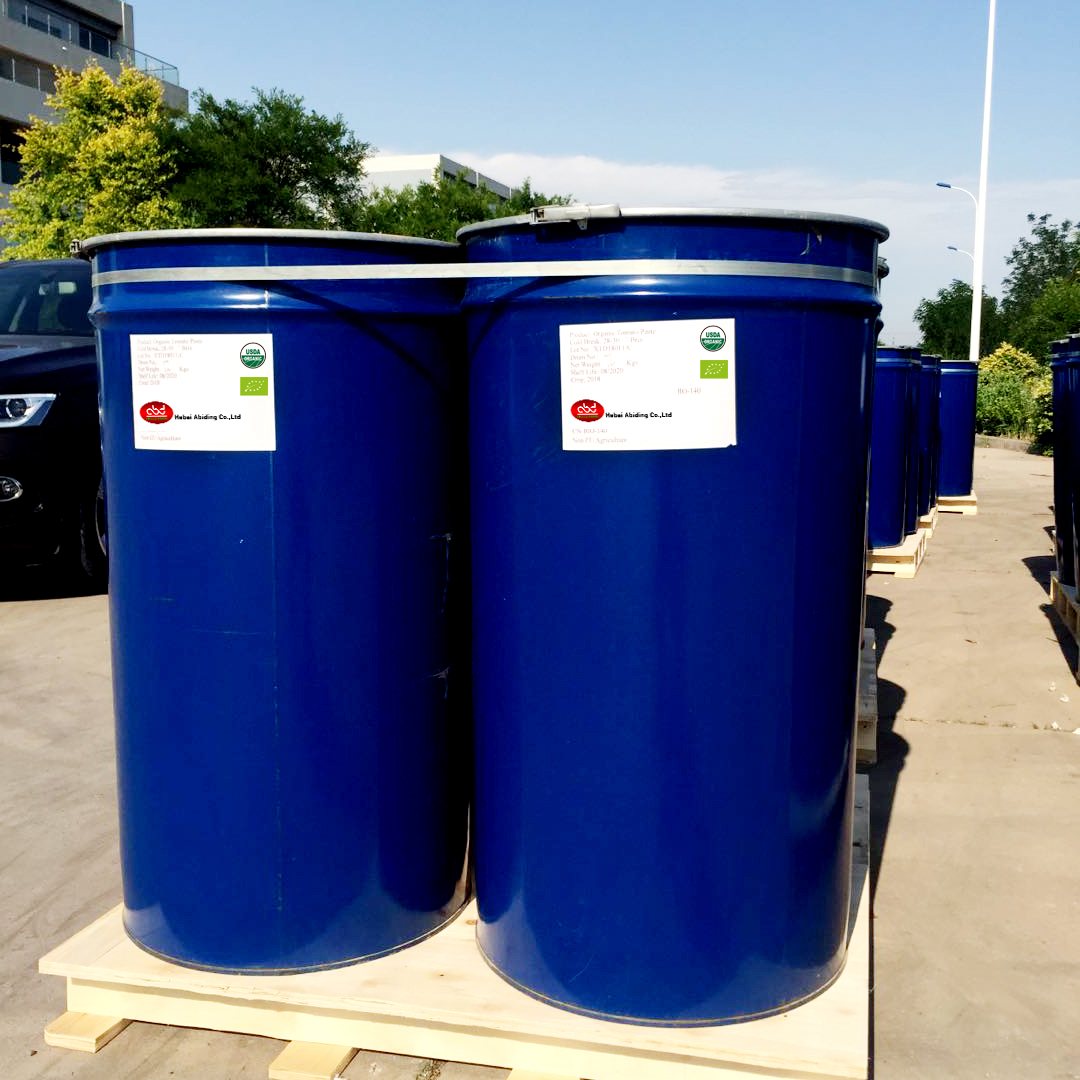
For manufacturers focused on long-distance distribution, bulk re-packing, and high-end tomato seasoning production, 36-38° Brix paste delivers unmatched logistics and storage advantages. Since it contains far less water per unit of tomato solids, factories can transport nearly 35% more pure tomato content in a single 220L aseptic drum, cutting freight costs per ton of effective raw material substantially. This grade is especially ideal for regions with high logistics expenses and limited local cold chain coverage.
3. Cost Structure Breakdown: Hidden Savings Beyond Unit Price
Many procurement teams only compare the per-ton price of different Brix grades, ignoring the huge hidden cost differences across the full supply chain. A 20ft container loaded with 220L drums of 28-30° Brix paste carries approximately 12-14 tons of pure tomato solids, while the same container space filled with 36-38° Brix paste delivers over 18 tons of effective tomato content. This directly reduces container usage frequency, customs declaration fees, and warehouse occupation costs.
However, the 36-38° Brix grade requires additional pre-processing equipment for most small and medium-sized factories. Its extremely high viscosity means it must be pre-heated to 60-70°C before being pumped into the mixing system, which adds steam consumption and 15-20 minutes of preparation time per drum. For factories with limited heating capacity and short daily production windows, this extra processing step may offset the logistics cost advantage.
4. Quality Performance in Final Products
The two concentrations also create distinct texture and flavor differences in finished products. The 28-30° Brix paste preserves more natural fresh tomato juice characteristics, making it easier to adjust sweetness and acidity in final products without adding extra water. It is the preferred choice for brands that pursue a bright, fresh tomato taste in their retail sauces.
The 36-38° Brix paste, with its higher lycopene content (minimum 50mg/100g as per industry standards), delivers a deeper red color and richer, more concentrated umami. It performs better in high-temperature sterilization processes, showing less color fading and layering after 12 months of shelf storage. This makes it highly favored by canned food manufacturers and industrial catering suppliers who require long product shelf life.
FQA Section
- Q: Can I dilute 36-38° Brix paste to get 28-30° Brix for my existing production line?A: Yes, but you need precise metering water mixing equipment and sufficient stirring time to ensure uniform texture, otherwise uneven Brix distribution may occur in the final product.
- Q: Does higher Brix mean higher additive content?A: No. Both grades in standard bulk drum products are 100% made from fresh ripe tomatoes, with no added sugar, preservatives or artificial ingredients. The Brix difference comes purely from controlled water evaporation.
- Q: Which grade is more suitable for export to high-temperature tropical markets?A: 36-38° Brix is more recommended, as its low water activity greatly reduces the risk of microbial spoilage during long-distance shipping and non-refrigerated storage.
- Q: What is the MOQ difference between the two concentrations for drum tomato paste?A: Both grades usually follow the 1x20ft container MOQ standard, but 36-38° Brix orders have longer production lead time due to the extra concentration process.
- Q: Can these two Brix grades be mixed in production to balance cost and flavor?A: Many large food manufacturers use a mixed formula: combining a small proportion of 36-38° Brix paste to enhance color and lycopene content, while using 28-30° Brix paste to maintain smooth processability and fresh flavor.
Post time: Aug-10-2026


