


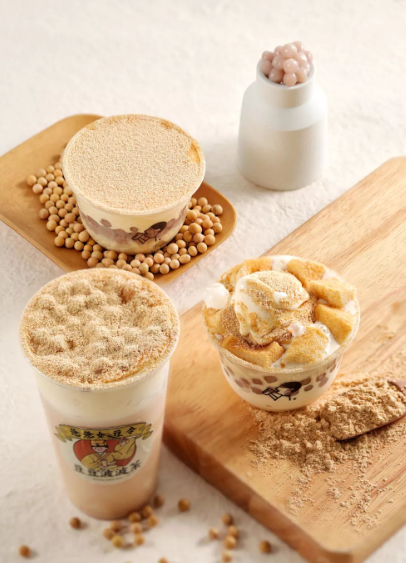
Global coffee and tea chains are rapidly rolling out soymilk-infused signature drinks, creating an unprecedented surge in demand for high-quality soymilk powder. This report explores how China’s mature soymilk powder supply chain is stepping up to meet this global market boom, addressing key challenges, innovations and collaborative opportunities along the way.
A Surge in Global Menu Innovation Drives Soaring Import Demand
Over the past 18 months, more than 60 major international coffee and tea brands have added soymilk-based speciality drinks to their regular menus, according to the latest industry data. From creamy soymilk lattes to layered bubble tea toppings, these new offerings have recorded average monthly sales growth of over 35% in North America, Europe and Southeast Asia. This sudden market shift has pushed overseas beverage operators to seek stable, large-volume suppliers of consistent-taste soymilk powder, and China’s decades-developed soybean processing industry has naturally become their first choice for sourcing.
China’s Supply Chain Upgrades to Match Overseas Market Standards
China’s leading soymilk powder manufacturers are now accelerating full-process upgrades to align with international food safety and flavour requirements. Many production bases have obtained HACCP, FDA and EU organic certifications, while adjusting production formulas to reduce beany aftertaste, extend solubility in cold water and maintain stable texture after high-temperature mixing. Local suppliers have also built dedicated overseas order production lines, cutting the average lead time for bulk orders from 45 days to 22 days, significantly improving response efficiency for the fast-changing beverage market.
Logistics and Customization Capabilities Become New Competitive Advantages
Beyond production capacity, Chinese soymilk powder suppliers are building more flexible service systems to meet diverse overseas demands. They now offer customized protein content, sweetness levels and packaging specifications for different regional markets, while cooperating with cross-border cold chain and bulk cargo platforms to reduce damage rates during long-distance transportation. Several leading enterprises have also set up local warehousing points in key overseas markets, enabling small and medium-sized tea shop customers to complete order replenishment within 72 hours.
Challenges Remain in Brand Building and Long-Term Cooperation Mechanisms
Despite the rapid growth, the supply chain still faces notable challenges. Many overseas beverage brands currently treat Chinese soymilk powder as a low-cost raw material rather than a high-value core ingredient, and there are gaps in long-term stable cooperation frameworks. Industry insiders point out that the next key step for the Chinese supply chain is to strengthen joint R&D with global beverage brands, develop exclusive soymilk powder products for signature drinks, and gradually establish the international brand influence of China’s high-quality plant-based raw materials.
FQA
Q: Why have soymilk speciality drinks suddenly become popular in overseas markets?
A: The trend is driven by the global rise of plant-based consumption, the innovative menu iteration of coffee and tea chains, and consumers’ growing demand for non-dairy, high-protein drink options that offer a unique creamy texture different from oat or almond milk.
Q: What advantages does China’s soymilk powder supply chain have over other global producing regions?
A: China has a complete industrial chain covering non-GMO soybean planting, advanced low-temperature drying technology and large-scale standardized production, which can stably provide high-cost-performance products while meeting diversified customization requirements that many small-scale suppliers cannot support.
Q: How do Chinese suppliers ensure that soymilk powder adapts to different beverage making scenarios?
A: R&D teams adjust the formula indexes such as particle fineness, protein dispersion and heat resistance through targeted tests for latte steaming, bubble tea shaking and cold brew mixing, to ensure no precipitation or stratification occurs within the specified drinking period.
Q: What is the current average delivery cycle for Chinese soymilk powder to major overseas markets?
A: For bulk container orders to North America, Europe and Southeast Asia, the normal delivery cycle after production is 15 to 30 days, and for customers using local overseas warehouses, the replenishment cycle can be shortened to 3 to 7 working days.
Q: What are the main certification requirements for Chinese soymilk powder to enter the overseas beverage market?
A: The core necessary certifications include food safety management system certification, destination market food registration (such as US FDA food facility registration, EU food import notification), and corresponding product test reports for microorganisms, heavy metals and additive limits.
Q: What development directions will China’s soymilk powder supply chain focus on in the next two years?
A: The industry will focus on joint product development with global beverage brands, launch more exclusive raw materials for speciality drinks, build international public brands of Chinese plant-based raw materials, and further improve the localized service network in key overseas consumption markets.
Post time: Sep-10-2026


