


In the global agricultural supply chain, fresh produce faces a critical challenge high spoilage rates during long-distance transportation. With traditional cold chain logistics struggling against cost and efficiency barriers, freeze-drying technology has emerged as a revolutionary solution. By utilizing ultra-low temperatures of – 35°C and vacuum sublimation, this method preserves over 96% of nutrients while eliminating the need for continuous refrigeration, fundamentally reshaping the economics of fruit and vegetable distribution.
The High Cost of Freshness: Breaking the Cold Chain Bottleneck
For decades, the fresh produce industry has been plagued by significant post-harvest losses. Data indicates that the loss rate for fresh fruits and vegetables during traditional long-distance transportation can reach between 20% and 30%. This inefficiency is primarily due to the fragility of fresh produce, which is susceptible to physical damage, microbial growth, and rapid respiration. While cold chain logistics have mitigated some issues, they remain expensive, energy-intensive, and vulnerable to temperature fluctuations. A single break in the cold chain can render an entire shipment unsellable. Furthermore, the reliance on refrigerated transport limits the geographic reach of many high-quality regional specialties, preventing them from accessing broader markets. The industry urgently requires a technology that decouples preservation from continuous energy consumption.
The Science of Sublimation: Preserving Quality at -35°C
Freeze-drying, or lyophilization, offers a scientific breakthrough by removing water without damaging cellular structures. The process begins with rapid freezing at temperatures below -35°C. This extreme cold ensures the formation of microscopic ice crystals, which prevents the large ice formations that typically rupture cell walls in conventional freezing. Once frozen, the produce is placed in a vacuum chamber where the pressure is lowered, allowing the ice to sublimate directly from solid to gas.
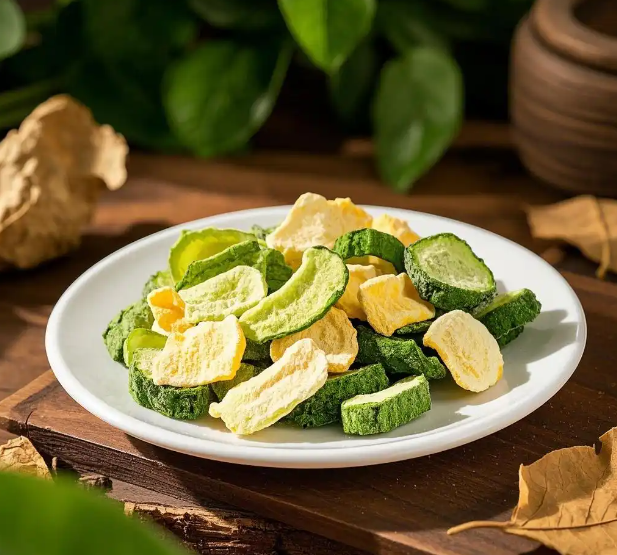
This low-temperature dehydration process is key to retaining quality. Unlike hot-air drying, which can degrade heat-sensitive nutrients like Vitamin C, freeze-drying preserves over 96% of the original nutritional content and 90% of volatile flavor compounds. The resulting product has a moisture content of less than 5%, creating an environment where microorganisms cannot survive. Consequently, no preservatives are needed, and the food remains stable at room temperature for up to two years.
Economic and Logistical Revolution: From Farm to Global Table
The adoption of freeze-drying technology transforms the logistics model from “transporting fresh” to “transporting stable.” Freeze-dried fruits and vegetables are lightweight, reducing shipping weight by approximately 85-90%. They are also durable, resistant to crushing, and do not require refrigerated containers. This shift drastically lowers logistics costs, with some estimates suggesting transport expenses can drop to a fraction of those for fresh produce.
Moreover, this technology empowers farmers in remote areas. Instead of rushing perishable goods to market, producers can process harvests locally into freeze-dried products. This reduces intermediate losses, stabilizes prices, and allows regional specialties to reach global consumers without compromising quality. The ability to store products in ordinary warehouses further reduces infrastructure costs, making it a sustainable solution for both small-scale farmers and large agricultural enterprises.
Frequently Asked Questions (FAQ)
Q1: How does freeze-drying differ from traditional drying methods?
A: Traditional drying uses heat, which often cooks the food, leading to nutrient loss and texture changes. Freeze-drying uses vacuum sublimation at low temperatures, preserving the original shape, color, taste, and up to 96% of nutrients.
Q2: Is freeze-dried food healthy?
A: Yes. Since the process occurs at low temperatures and requires no added preservatives or sugars, freeze-dried food retains most of the vitamins, minerals, and antioxidants found in fresh produce. It is a natural and healthy option.
Q3: Why is -35°C specifically important in the process?
A: Rapid freezing at -35°C or lower ensures that water inside the cells forms tiny ice crystals. This prevents cell wall damage, ensuring that when the water is removed, the structural integrity and texture of the fruit or vegetable are maintained upon rehydration.
Q4: Does freeze-dried food need refrigeration?
A: No. Once properly sealed, freeze-dried food has extremely low moisture content, preventing microbial growth. It can be stored at room temperature in a dry place for 1-2 years without spoiling.
Q5: How does this technology reduce transportation costs?
A: Freeze-drying removes about 90-95% of the water weight. This significantly reduces the weight and volume of the cargo. Additionally, it eliminates the need for expensive refrigerated trucks and containers, lowering both fuel and equipment costs.
Q6: Can freeze-dried fruits be eaten directly?
A: Absolutely. Freeze-dried fruits are crispy and can be eaten as snacks directly. They can also be rehydrated with water to restore their original texture for use in cooking or baking.
Post time: Aug-21-2026


