


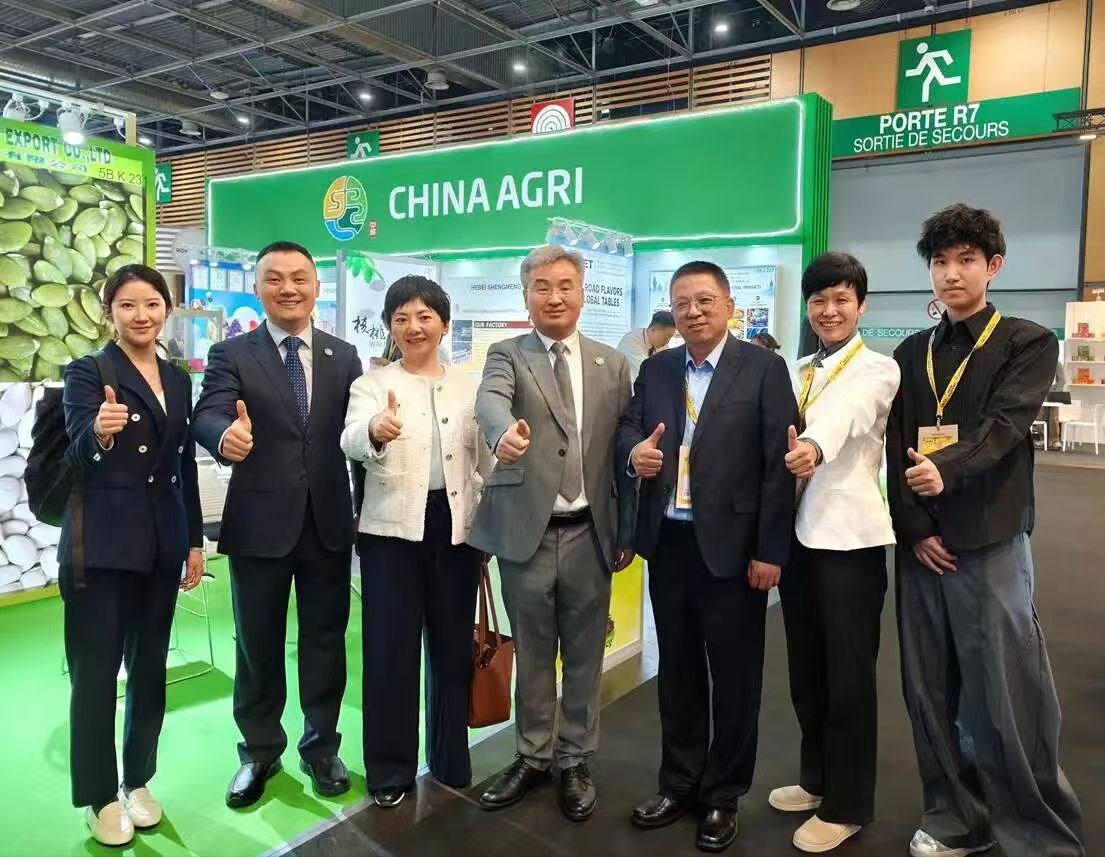
The doors at Paris Nord Villepinte closed on 21 October, wrapping another edition of SIAL Paris — the biennial event the industry treats as its global shop window. The 2026 edition ran from 17 to 21 October across 280,000 square metres, bringing together 8,000 exhibitors from 130 countries, 400,000 products on display and 650 startups.
For anyone in the ingredient business, a show on that scale is less about what was on the shelves and more about what the shelves were trying to say. Below are the five shifts SIAL Paris 2026 put front and centre, plus a practical look at which ingredients answer them — because that is the part that matters when you sit down to write a spec sheet.
The show in numbers
| SIAL Paris 2026 | |
|---|---|
| Dates | 17–21 October 2026 |
| Venue | Paris Nord Villepinte, France |
| Exhibitors | 8,000 |
| Countries represented | 130 |
| Products on display | 400,000 |
| Startups | 650 |
| Key sectors | 10, including Pulses, Grains, Fruits & Vegetables; Organic & Wellness; Food Processing; Ready Meals & Food-to-go |
Under the banner “Inspire Food Business,” the organisers built the programme around a handful of dedicated destinations: SIAL Innovation as the show’s observatory for new products, SIAL Summits for the conference track, SIAL StrEat Lab for foodservice and street food, SIAL Bakery for bakery and snacking, and a dedicated snacking floor in Hall 4A. Read those choices together and a clear picture emerges of where the industry believes growth is coming from.
1. Snacking and food-to-go moved to the centre of the floor
Snacking got its own hall this year, and foodservice concepts got their own stage. That is a meaningful signal: the in-between meal is now a category in its own right, not a by-product of the retail aisle.
For formulators, snack and food-to-go products live or die on three things — flavour intensity, texture, and the ability to sit in ambient storage without degrading. That is precisely where fruit and vegetable ingredients earn their place: fruit and vegetable purees and concentrates deliver flavour and colour without a flavour house’s ingredient list, air-dried (AD) and freeze-dried (FD) fruit and vegetable pieces carry texture and visual identity in bars, clusters and savoury snacks, and soy fiber adds bulk and bite while keeping the protein claim honest.
2. Plant-based grew up and got quieter about it
The plant-based conversation at this edition was noticeably less about mimicry and more about nutrition, texture and cost. Buyers are no longer asking “can you make it taste like meat?” They are asking what is in it, how much protein it actually delivers, and whether the price per kilo survives a supermarket tender.
That shift favours ingredients that are functional rather than theatrical. Soy protein gives a clean protein base for beverages, meat-alternatives and baked goods; soy fiber — recovered from the same bean — improves water binding and texture while lifting the fibre number on the panel. Used together, they let a formulator hit a protein-plus-fibre claim without stacking additives.
3. Clean label stopped being a marketing line
Clean label has been a talking point for a decade. What changed is that it has become a procurement criterion — something written into specifications rather than printed on pack.
The most straightforward answer is the shortest ingredient list: a puree that is fruit, nothing else. Single-ingredient fruit and vegetable purees and concentrates, and tomato paste with no added sugar, salt or preservative, let a brand declare a clean panel without reformulating around it. It also makes label compliance across markets simpler, which matters more than most people expect when you are selling into several EU member states at once.
4. Organic and wellness kept their premium — with proof attached
Organic & Wellness remains one of the show’s ten key sectors, and the buyers walking it have become considerably more rigorous. Certification is checked at the specification stage, and the paperwork is checked again at audit.
This is where sourcing discipline shows. Organic tomato paste is only as good as the chain behind it — organic-certified growing, segregated processing lines and traceable documentation from field to finished drum. We supply organic tomato paste under USDA NOP certification, with the documentation to support EU and other market requirements, alongside conventionally grown tomato paste for buyers whose price point sits elsewhere.
5. Supply stability is now a product feature
Perhaps the least glamorous theme, and the one that generated the most serious conversations: buyers want to know what happens in a bad year. Crop volatility, freight costs and currency moves have pushed resilience up the agenda, and a supplier’s ability to hold a specification stable across seasons has become part of the offer.
Ambient-stable formats help. Air-dried and freeze-dried vegetables, aseptic fruit and vegetable purees and concentrates, and canned tomato paste all avoid the cold-chain exposure of frozen product while giving a long, predictable shelf life — which in practice means fewer reformulations and fewer rejected batches.
Matching ingredient to trend
| Trend from SIAL Paris 2026 | Ingredient | Typical applications |
|---|---|---|
| Snacking & food-to-go | FD / AD fruit and vegetable pieces; fruit puree concentrates | Bars, clusters, baked snacks, savoury mixes, dips |
| Plant-based 2.0 | Soy protein; soy fiber | Plant-based drinks, meat analogues, bakery, cereal bars |
| Clean label | Single-ingredient fruit and vegetable purees; tomato paste with no additives | Sauces, soups, baby food, beverages, ready meals |
| Organic & wellness | Organic tomato paste (USDA NOP) | Retail sauces, pizza and pasta applications, private label |
| Supply stability | Aseptic purees and concentrates; canned tomato paste; dried vegetables | Foodservice, industrial blending, long-shelf-life retail |
What buyers usually ask us first
Four questions come up again and again, whatever the market:
Can we have samples? Yes — samples for bench trials are standard, and we would rather you test than take our word for it.
What is the minimum order? It depends on the product and packaging format. Tell us the application and the annual volume you have in mind and we will quote against it rather than against a generic price list.
What documentation comes with the goods? Specification sheets, certificates of analysis and origin, allergen and GMO statements, and certification documents where applicable.
Can you develop to our specification? Brix, screen size, colour, viscosity, packaging — most of our range can be adjusted. That is the difference between buying a commodity and buying an ingredient.

Looking ahead
SIAL Paris returns every two years, but the network keeps the conversation going in between — SIAL in China, SIAL Canada, SIAL India, Food & Drinks Malaysia, SIAL Vietnam and SIAL Indonesia all run on the same platform, and the same buyers move between them.
If one of the five shifts above matches a product you are developing, we would be glad to talk specifics. Hebei Abiding Co., Ltd supplies plant protein, fruit and vegetable juices, purees and concentrates, organic tomato paste, and FD/AD fruit and vegetable ingredients to food and beverage manufacturers worldwide.
Get in touch: sales@hebeiabiding.com · Tel/Fax +86-311-85335656 · Mobile +86-13582115098 · www.hebeiabiding.com
FAQ block (add below the article, marked up with FAQPage schema)
When is the next SIAL Paris?
SIAL Paris is held every two years at Paris Nord Villepinte. The 2026 edition ran from 17 to 21 October. Between Paris editions, the SIAL network runs shows in Canada, China, India, Indonesia, Malaysia and Vietnam.
What is SIAL Paris known for?
It is one of the world’s largest food trade exhibitions, covering ten key sectors from meat and dairy to pulses, grains, fruits and vegetables, organic and wellness, and food processing. It is best known as an innovation showcase, with SIAL Innovation selecting new products from around the world.
Which of your products suit a clean-label formulation?
Post time: Oct-22-2026


