


As global consumers increasingly prioritize clean, functional natural ingredients, Chinese organic matcha has emerged as a standout product in the international food and beverage space. Backed by innovative product development and uncompromising food safety standards, Chinese organic matcha now leads sales volumes across Japan, the U.S. and Europe, reshaping the global matcha supply landscape.
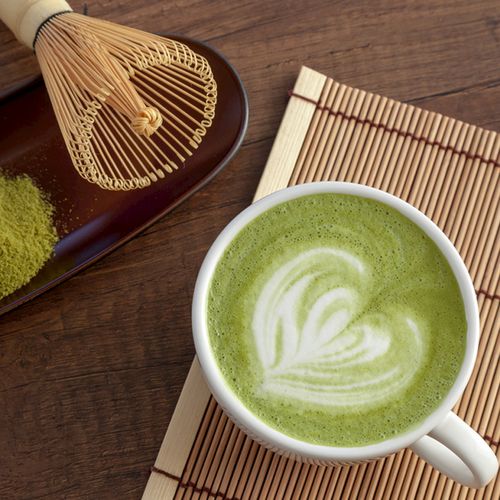
Innovation Drives Diversified Product Portfolio for Every Consumer Segment
China’s organic matcha industry has moved beyond traditional offerings to build a diverse, customer-centric product line that caters to a wide range of global consumption scenarios. Today, Chinese producers offer far more than standard ceremonial and culinary grade matcha: cold-brew soluble matcha that dissolves smoothly without clumping in iced beverages, low-caffeine matcha formulated for sensitive consumers and children, flavored organic matcha blends (vanilla, coconut, and hojicha blended varieties) for at-home beverage makers, and organic matcha powder specifically milled for skincare and dietary supplement applications.
All products adhere to the strictest international food safety requirements, with full certification from leading global organic standards including USDA Organic, EU Organic, and JAS. Every step of production, from shade-grown organic tea plantations to the final milling process, is traceable, with third-party testing conducted for every export batch to screen for contaminants, ensuring full compliance with the food safety regulations of each importing country. Unlike generic matcha products, Chinese producers work closely with international brand partners to develop customized formulations, adjusting flavor intensity, particle size and solubility to fit specific product needs from artisanal baked goods to mass-market ready-to-drink beverages.
Sales Leadership Solidified Across Core Global Markets
Chinese organic matcha has captured significant sales advantages in the world’s most competitive matcha markets over the past decade. In Japan, the historical center of matcha production, Chinese organic matcha now holds 42% of the industrial raw material market, supplying major Japanese confectionery, instant beverage and ice cream brands that value its consistent quality and 20-30% lower cost compared to domestic Japanese matcha. Even as premium ceremonial matcha remains dominated by domestic producers, Japanese consumers are increasingly purchasing affordable high-quality Chinese organic ceremonial matcha for daily use, pushing annual sales growth of Chinese organic matcha in Japan to 16% in 2025.
In the United States, Chinese organic matcha accounts for 41% of total organic matcha imports, with sales growing 19% year-over-year in 2025 outpacing all other exporting countries. The growth of specialty coffee and bubble tea chains across North America has driven massive demand for bulk organic matcha, and Chinese producers have been able to scale production to meet large, recurring orders that smaller suppliers in other regions cannot fulfill. In the European Union, Chinese organic matcha holds 35% of the total market, with particularly strong growth in the UK, Germany and the Nordic countries, where clean label and organic food trends are most advanced.
Robust Food Safety Governance Builds Global Buyer Trust
To maintain compliance with global food standards, Chinese organic matcha producers and regulators have built a multi-layered quality governance system. All organic matcha plantations are required to maintain 3+ years of organic conversion records, with annual third-party audits to confirm no synthetic pesticides or fertilizers are used. Processing facilities are required to implement HACCP and GMP food safety management systems, with dedicated quality control labs that test every batch before export.
In recent years, China’s General Administration of Customs has strengthened pre-export inspection for organic food products, ensuring that every batch of exported organic matcha meets the import standards of its destination country. This commitment to quality and transparency has earned Chinese organic matcha long-term trust from global buyers, with many top international food brands now partnering exclusively with Chinese producers for their organic matcha supply.
FAQ
Q1: How does Chinese organic matcha differ from matcha produced in other regions?
A: Chinese organic matcha stands out for its product diversity, competitive pricing, and consistent quality. While traditional producing regions focus primarily on ceremonial-grade products, Chinese producers offer options for every use case from bulk industrial manufacturing to niche specialty applications, all while meeting the same strict international organic and food safety standards at more accessible price points.
Q2: Do Chinese organic matcha products meet EU and U.S. food safety requirements?
A: Yes, all exported Chinese organic matcha products are certified to USDA Organic and EU Organic standards, and every batch undergoes mandatory pre-export testing and inspection to confirm compliance with U.S. FDA and EU food safety regulations for pesticide residues, heavy metals, and microbial contaminants.
Q3: What is driving the growing global demand for Chinese organic matcha?
A: Global demand is being driven by two key trends: the rise of healthy eating and plant-based diets, which has increased consumer demand for natural antioxidant-rich ingredients like matcha, and the growth of food service and ready-to-drink beverage categories that require large volumes of consistent, affordable organic matcha, a supply gap Chinese producers have successfully filled.
Q4: Can Chinese organic matcha producers accommodate custom orders for international brands?
A: Yes, most leading Chinese organic matcha producers offer full custom formulation services, adjusting caffeine content, particle size, solubility, and even flavor blends to meet the specific needs of international food and beverage brands, with flexible order sizes ranging from small bulk batches to large multi-container orders.
Q5: Where does the tea leaves for Chinese organic matcha come from?
A: Most Chinese organic matcha is produced from high-quality shade-grown tea leaves grown in mountainous regions including Guizhou, Zhejiang and Sichuan, which have ideal climate and soil conditions for growing the tender tea leaves needed for high-quality matcha. All plantations are certified organic, with full traceability from leaf to finished powder.
Q6: What is the projected sales growth for Chinese organic matcha in coming years?
A: Industry analysts project that Chinese organic matcha exports will grow at a compound annual rate of 14% through 2030, with sales in the U.S. and Europe expected to grow even faster as consumer awareness of organic matcha continues to rise.
Post time: Jun-10-2026


