


The Tofoo Co, founded by British couple David Knibbs and Lydia Smith, has redefined tofu in the UK, turning this traditional Asian ingredient into a trendy, mainstream product with a 62% market share in 2024. What’s more surprising is their bold innovation—launching XXL-sized tofu (750g) like clothing sizes, a move that has captured consumers’ attention.
Back in 2016, the pair acquired a small artisanal tofu workshop with an annual revenue of just £600,000. By 2025, they had grown it to a £32 million business, defying the 7% decline of the UK’s meat-free category with an 19% revenue surge. Their success stems from solving the core pain points of British consumers: “tofu phobia”—caused by overly watery tofu that required 30 minutes of pressing before cooking, and a dull, unapproachable brand image. Only 8% of UK households ate tofu in 2023, yet David spotted huge potential by comparing it to the £175 million US tofu market, estimating the UK’s untapped value at £40 million (vs. the actual £7 million then).
Leveraging their decades of experience in FMCG—David in sales at Mars and Lydia in retail at Arla—they revamped the product first. Using traditional Japanese nigari coagulant instead of calcium sulfate, they created extra-firm tofu with pre-pressed moisture, making it “open-and-use”. The packaging and official website offer simple, step-by-step guides: drain, chop, cook, enjoy, with six preparation methods (cube, crumble, tear, etc.) and Western-style recipes like tofu pizza and curry, integrating tofu into British eating habits.
Their go-to-market strategy was equally sharp. Lydia’s retail connections got them into 2,000 Tesco stores in 2016. They convinced buyers with Kantar data and a vision to grow the category, not just compete. Priced at £2.30 for a 280g pack—mid-range in the meat-free category—their Naked Tofoo became the best-selling SKU in the tofu market by 2023, expanding to all major UK supermarkets and seeing 100% growth in the foodservice channel by 2025.
Marketing focused on in-store tastings, with an 89% increase in 2024 spending—they believed “a bite beats a thousand ads”. Unlike other plant-based brands that mimicked meat, The Tofoo Co positioned tofu as a standalone ingredient with a fun, down-to-earth brand voice: no preachy eco-messaging, just humorous, relatable copy like “This spelling is a mistake. So is this sentence. But Tofoo isn’t.”
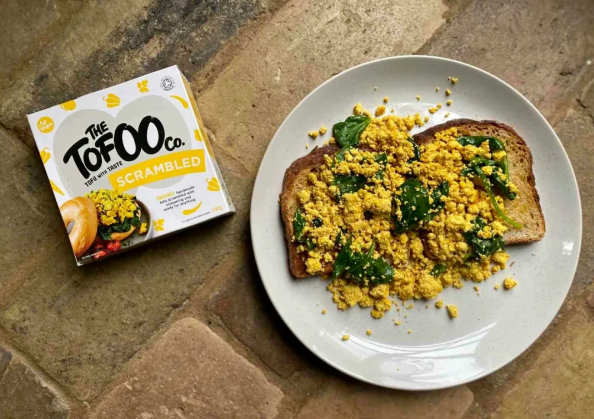
Product innovation is their hallmark. They offer tofu in clothing-like sizes (280g, 450g, 750g XXL) and launched the UK’s first frozen tofu, plus pre-marinated, pre-cut “lazy tofu” variants—smoked, sriracha, and even scrambled tofu that tastes like eggs. The bold, blocky packaging with bright colors and giant branding stands out on shelves, with clear usage instructions printed directly on it.
With investment from German fund Comitis Capital in 2024, The Tofoo Co expanded to France’s top supermarkets in 2025 and acquired German plant-based producer Topas in 2026, gaining access to its European distribution network for a German launch. This sets the stage for a European tofu battle, with Korean brand Pulmuone also eyeing the market—yet China, tofu’s birthplace, is still absent.
The Tofoo Co’s journey offers key lessons for Chinese traditional food brands: globalization lies in simplifying usability, localizing recipes, and building a youthful, approachable brand. Just as Lipton redefined Chinese tea, The Tofoo Co has reimagined tofu—proving that age-old ingredients can win global hearts with smart innovation. China’s strength in flavor creation, paired with modern branding, could make it a global tofu leader. And a Tofoo Co entry into China might just be the “catfish” to spark a new wave of innovation in China’s tofu industry.
Post time: Mar-20-2026